
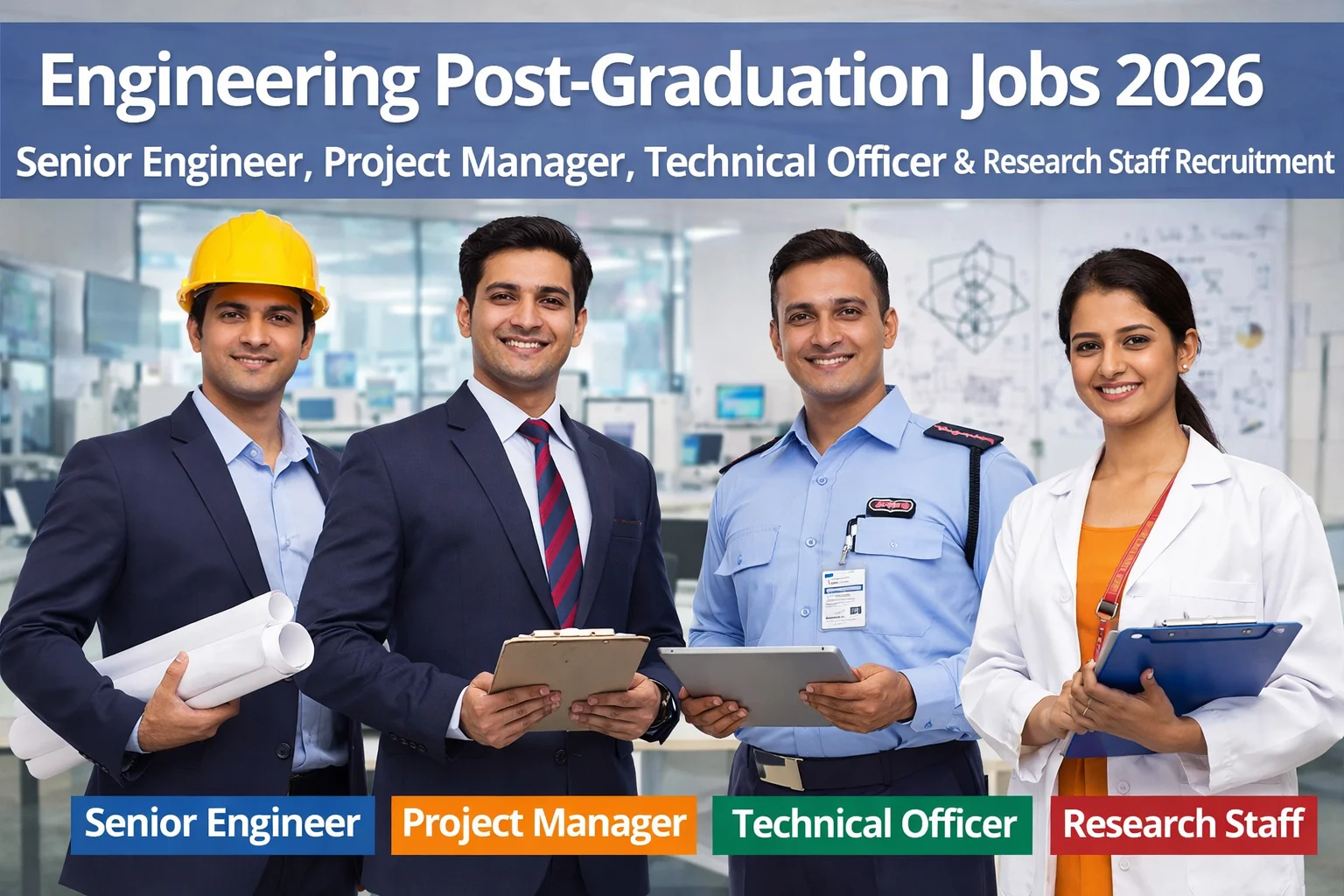
The engineering sector has long been the backbone of India’s economic growth, and as we navigate through 2026, the demand for specialized technical talent is at an all-time high.
With rapid advancements in artificial intelligence, renewable energy, infrastructure development, semiconductor manufacturing, and defense technology, organizations across industries are seeking professionals who possess not just technical expertise but also leadership capabilities and research acumen. For post-graduates holding M.Tech, M.E., or equivalent degrees, the career landscape is rich with opportunities that extend far beyond traditional engineering roles.
However, transitioning from advanced academic study to the professional world requires more than just a specialized degree. Success in engineering careers demands a combination of technical depth, project management skills, innovative thinking, and the ability to collaborate across multidisciplinary teams. This guide provides a blueprint for post-graduates seeking to secure roles ranging from senior engineer and project manager to technical officer and research staff vacancies in 2026.
Understanding the Engineering Landscape
India’s engineering ecosystem is vast and multifaceted, encompassing core sectors such as manufacturing, infrastructure, automotive, aerospace, and energy, alongside emerging fields like artificial intelligence, robotics, semiconductors, and biotechnology. For post-graduates, the entry point often depends on the specialization pursued during higher education—whether civil, mechanical, electrical, electronics, computer science, or interdisciplinary fields.
Public sector undertakings continue to offer prestigious career paths through competitive examinations, while private sector giants, multinational corporations, and high-growth startups actively recruit specialized talent. Research and development centers, government laboratories, and academic institutions also provide opportunities for those inclined toward innovation and scientific inquiry. The sector also requires a robust ecosystem of technical officers, project coordinators, and quality assurance professionals who bridge the gap between design and execution.
Key Roles and Salary Expectations
To help you navigate the current recruitment landscape, the table below outlines common engineering roles available for post-graduates in 2026, along with typical responsibilities and average monthly salary ranges. Please note that salaries vary significantly based on industry sector, company reputation, geographic location, years of experience, and specialization.
| Job Title | Typical Responsibilities | Average Entry-Level Salary Range (Per Month) |
|---|---|---|
| Senior Engineer (Design / Development) | Lead design projects, conduct simulations, oversee prototyping, collaborate with cross-functional teams, ensure technical compliance | ₹50,000 – ₹90,000 |
| Project Manager (Assistant / Associate) | Plan and execute projects, manage budgets and timelines, coordinate with stakeholders, mitigate risks, report progress to leadership | ₹60,000 – ₹1,00,000 |
| Technical Officer | Provide technical support, oversee quality control, conduct inspections, ensure compliance with standards, manage documentation | ₹40,000 – ₹70,000 |
| Research Engineer | Conduct applied research, develop prototypes, publish findings, collaborate with academic and industry partners, support intellectual property development | ₹55,000 – ₹95,000 |
| Site Engineer / Construction Manager | Supervise construction activities, manage contractors, ensure safety compliance, monitor material quality, coordinate with architects and consultants | ₹45,000 – ₹80,000 |
| Quality Assurance Engineer | Develop quality standards, conduct audits, analyze defects, implement continuous improvement initiatives, ensure regulatory compliance | ₹45,000 – ₹75,000 |
| Systems Architect | Design complex systems, define technical requirements, ensure scalability and security, guide development teams, document architectural decisions | ₹70,000 – ₹1,20,000 |
| Automation Engineer | Design and implement automated systems, program PLCs and robotics, troubleshoot control systems, optimize manufacturing processes | ₹50,000 – ₹85,000 |
| Research & Development Scientist | Lead R&D initiatives, design experiments, analyze data, secure patents, collaborate with cross-functional teams on product innovation | ₹60,000 – ₹1,10,000 |
These roles represent a starting point for post-graduates entering the engineering workforce. With experience and consistent performance, professionals can progress to senior leadership positions such as Engineering Director, Chief Technology Officer, Head of R&D, or Senior Project Director within eight to twelve years. Additionally, pursuing certifications in project management (PMP), Six Sigma, or specialized technical domains can significantly accelerate career advancement.
Building a Competitive Edge
In a competitive hiring market, a postgraduate engineering degree alone is rarely sufficient to secure top roles. Employers in 2026 are looking for candidates who demonstrate practical problem-solving abilities, industry-relevant skills, and a track record of delivering results. During your postgraduate studies, seek opportunities to gain hands-on experience through internships, industry-sponsored projects, research assistantships, or participation in technical competitions. These experiences not only strengthen your resume but also provide invaluable exposure to real-world engineering challenges.
Additionally, developing proficiency in industry-standard software tools, programming languages, simulation platforms, and project management frameworks can significantly enhance your employability. Publications in peer-reviewed journals, patents, and conference presentations are highly valued for research-oriented roles. Soft skills such as communication, team leadership, critical thinking, and adaptability are equally critical and often differentiate successful candidates in technical interviews.
Navigating the Recruitment Process
Engineering recruitment in 2026 spans multiple channels. Campus placements remain a primary route for post-graduates from premier institutions such as IITs, NITs, and other top engineering colleges. Public sector undertakings including BHEL, SAIL, NTPC, ONGC, and ISRO conduct competitive examinations (GATE-based) for recruitment of engineers. Private sector companies across automotive, aerospace, manufacturing, IT, and infrastructure sectors recruit through online job portals, referral programs, and industry networking events.
Your application materials should reflect the technical depth of your postgraduate education. A well-structured resume should highlight not only your academic qualifications but also any project work, research publications, technical skills, and measurable achievements—such as improving process efficiency, leading successful projects, or contributing to patent filings. During interviews, expect both technical and behavioral questions that assess your problem-solving methodology, depth of knowledge, and ability to work in collaborative environments.
Embracing a Career of Innovation and Impact
The engineering profession is one of continuous learning and adaptation. With technology evolving at an unprecedented pace, professionals must remain curious, embrace new tools and methodologies, and stay abreast of industry trends. While the work can be demanding—particularly in roles that involve tight deadlines, complex problem-solving, and cross-functional coordination—the rewards are substantial. The sector offers opportunities to work on transformative projects, contribute to national development, and build solutions that impact millions of lives.
As you step into the world of engineering excellence in 2026, remember that your postgraduate education has equipped you with specialized knowledge and advanced analytical capabilities. Now, it is time to complement that foundation with practical experience, continuous skill development, and a commitment to excellence. The engineering industry is waiting for professionals who can combine technical mastery with leadership vision—and your journey begins now.