
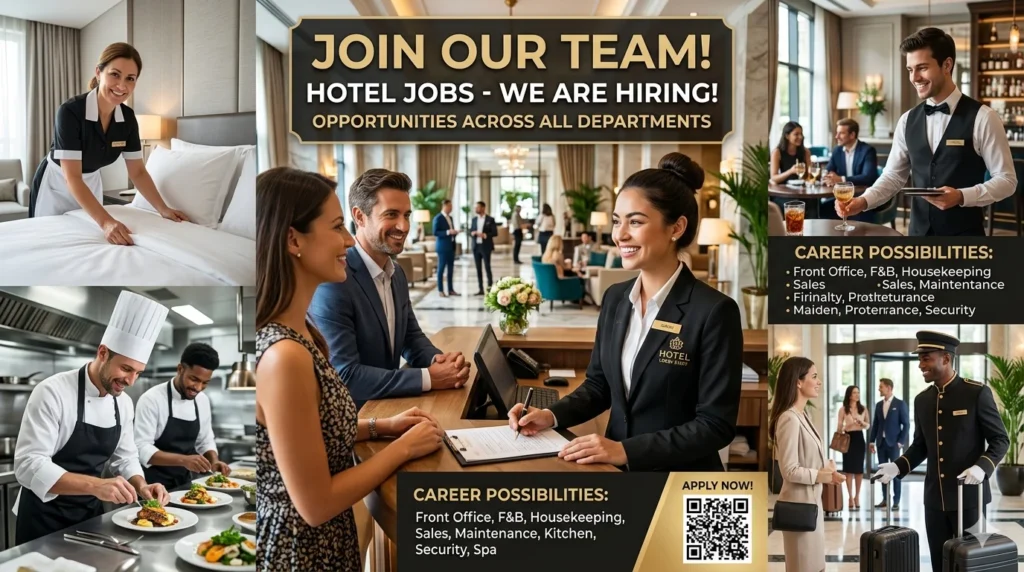
The hospitality industry has long been a pillar of India’s service economy, and as we move through 2026, the sector is witnessing a remarkable resurgence.
With domestic travel booming, international tourism rebounding, and new hotel chains expanding into tier-2 and tier-3 cities, the demand for skilled professionals has never been higher. For post-graduates looking to enter this dynamic field, the opportunities extend far beyond traditional roles. Whether you hold an MBA, a master’s in hotel management, or a postgraduate degree in a related discipline, the hospitality sector offers a structured and rewarding career path.
However, transitioning from academia to the fast-paced world of hotel operations requires more than just a degree. Success in hospitality careers demands a unique blend of theoretical knowledge, emotional intelligence, operational awareness, and the ability to deliver exceptional guest experiences. This guide provides a blueprint for post-graduates seeking to secure roles ranging from management positions to front office executive and support staff vacancies in 2026.
Understanding the Hospitality Landscape
The hotel industry in India is diverse, encompassing luxury five-star properties, boutique hotels, budget chains, heritage properties, and emerging homestay aggregators. Each segment requires a distinct skill set, but all share a common foundation: a commitment to service excellence. For post-graduates, the entry point often depends on the specialization pursued during higher education. Those with MBAs in hospitality or marketing may find themselves well-suited for managerial tracks, while graduates with master’s degrees in hotel management often begin in operational roles such as front office or food and beverage.
Beyond traditional hotels, the ecosystem includes cruise lines, corporate hospitality divisions, event management companies, and luxury resort chains. The skills acquired in a postgraduate program—strategic thinking, leadership, financial acumen, and people management—are directly transferable to these environments.
Key Roles and Salary Expectations
To help you navigate the current recruitment landscape, the table below outlines common hospitality roles available for post-graduates in 2026, along with typical responsibilities and average monthly salary ranges. Please note that salaries vary based on property type, location, brand reputation, and prior experience.
| Job Title | Typical Responsibilities | Average Entry-Level Salary Range (Per Month) |
|---|---|---|
| Hotel Manager (Trainee / Assistant) | Oversee daily operations, manage staff, ensure guest satisfaction, monitor budgets, implement brand standards | ₹35,000 – ₹60,000 |
| Front Office Executive | Greet and assist guests, manage check-in/check-out, handle reservations, resolve complaints, coordinate with other departments | ₹22,000 – ₹35,000 |
| Operations Head (Assistant) | Supervise housekeeping, food and beverage, and maintenance teams; ensure operational efficiency; manage inventory | ₹40,000 – ₹70,000 |
| Food and Beverage Manager (Trainee) | Manage restaurant and banquet operations, oversee service standards, control costs, train service staff | ₹30,000 – ₹50,000 |
| Sales and Marketing Executive | Develop corporate accounts, manage online travel agency partnerships, coordinate promotional campaigns, achieve revenue targets | ₹25,000 – ₹45,000 |
| Human Resources Coordinator | Handle recruitment, employee engagement, training programs, payroll support, and compliance with labor laws | ₹25,000 – ₹40,000 |
| Housekeeping Supervisor | Inspect rooms and public areas, manage housekeeping staff, oversee inventory of linens and supplies, maintain hygiene standards | ₹20,000 – ₹32,000 |
These roles represent a starting point for post-graduates entering the industry. With experience and consistent performance, professionals can progress to senior management positions such as General Manager, Regional Operations Head, or Director of Sales within five to seven years.
Building a Competitive Edge
In a competitive hiring market, a postgraduate degree alone is rarely sufficient to secure top hospitality roles. Employers in 2026 are looking for candidates who demonstrate practical readiness and a service-oriented mindset. During your postgraduate studies, seek opportunities to gain hands-on experience through internships, industrial training programs, or part-time roles in hospitality settings. These experiences not only build your resume but also provide valuable insights into the realities of hotel operations.
Additionally, developing proficiency in hotel management software such as Opera, IDS, or other property management systems can significantly enhance your employability. Language skills—particularly proficiency in English and one or more regional or international languages—are highly valued in guest-facing roles. Soft skills such as conflict resolution, cultural sensitivity, and emotional intelligence are equally critical and often differentiate successful candidates in interviews.
Navigating the Recruitment Process
Hospitality recruitment in 2026 is increasingly multi-channel. While traditional campus placements remain strong for post-graduates from premier hotel management institutes, many properties also recruit through online job portals, walk-in interviews, and industry networking events. Major hotel chains such as Taj, Oberoi, Marriott, Hyatt, and ITC frequently conduct recruitment drives, particularly during the pre-season months leading up to peak travel periods.
Your application materials should reflect the unique demands of the hospitality industry. A well-structured resume should highlight not only your academic qualifications but also any customer-facing experience, leadership roles, and measurable achievements—such as improving guest satisfaction scores or contributing to successful events. During interviews, expect scenario-based questions that assess your problem-solving abilities, composure under pressure, and alignment with the property’s service philosophy.
Embracing a Career of Growth
The hospitality industry is not for the faint of heart. It demands long hours, flexibility, and a genuine passion for serving others. However, for post-graduates who embrace these challenges, the rewards are substantial. The sector offers rapid career progression, opportunities for international postings, and the chance to develop a versatile skill set that is valued across industries.
As you step into the world of hospitality careers in 2026, remember that your postgraduate education has equipped you with strategic thinking and analytical abilities. Now, it is time to complement that foundation with hands-on experience, relationship-building, and an unwavering commitment to excellence. The hospitality industry is waiting for leaders who can combine vision with execution—and your journey begins now.